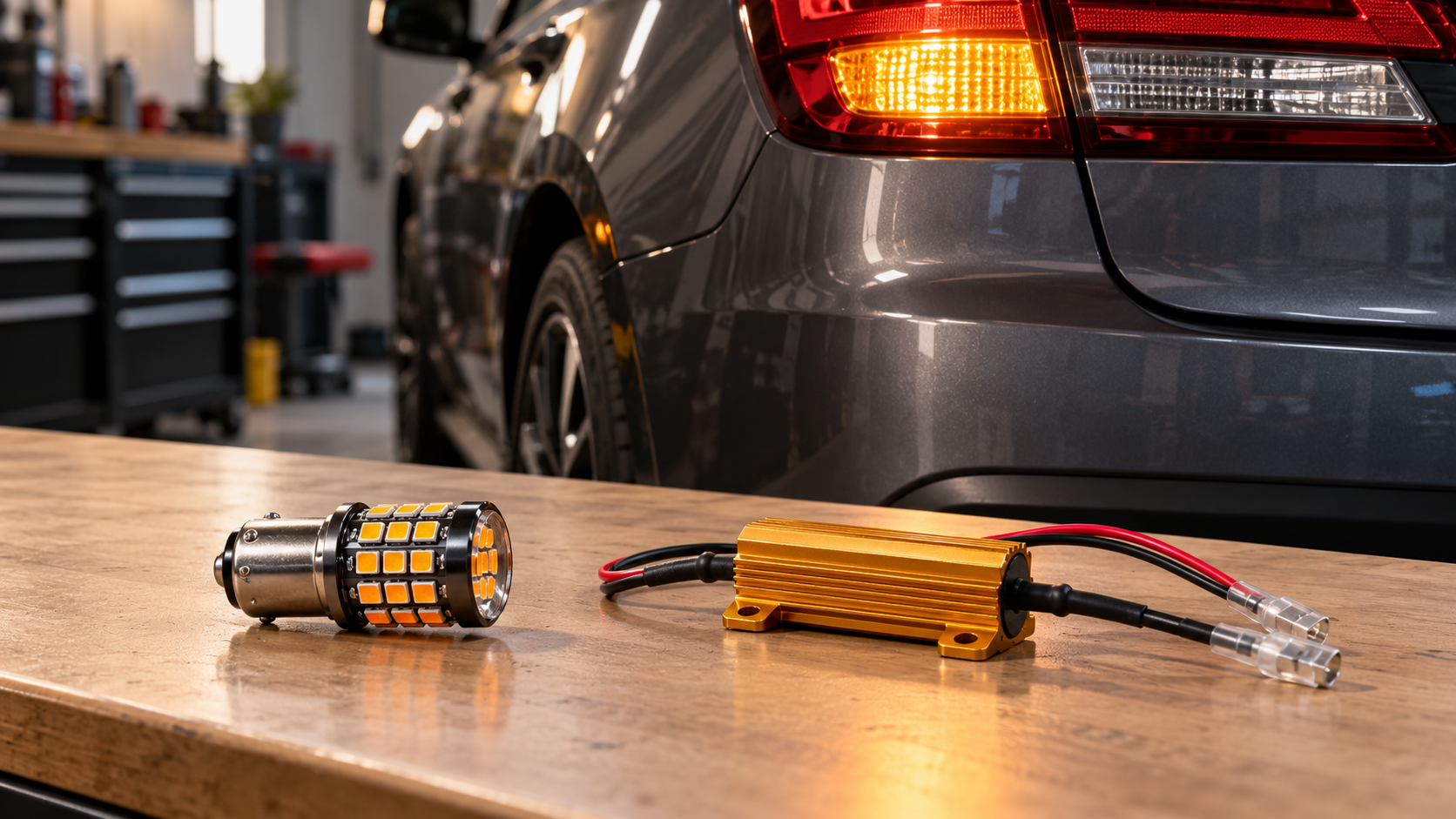

A fast-blinking turn signal after an LED conversion can point to a vehicle bulb-monitoring or flasher compatibility issue, but the symptom alone does not prove that a resistor is the right fix. First confirm that the signal still illuminates and identify whether the change began immediately after the bulb replacement.
This is a purchase-decision guide, not a wiring tutorial. Follow the vehicle and component manuals; if a turn signal is not working reliably, repair it before driving. Browse more lighting topics in our Car Lighting hub. If you first need to verify the bulb position and socket, use our turn-signal bulb guide before choosing a decoder.
Check the symptom before choosing a part
- With the vehicle parked, check each signal and the hazard function. Ask another person to observe the exterior lamps while you operate the controls. Do not step into traffic or rely only on the dashboard indicator.
- Record what changed. Note whether the fast flash or dashboard warning appeared after an LED swap, whether one or several positions are affected, and whether the lamp itself still flashes.
- Confirm the correct bulb type and position. Use the vehicle manual or original bulb marking. Do not assume front and rear sockets or dual-function positions use the same part.
- Check the LED maker’s exact application notes. Look for your socket and vehicle details, and whether the maker lists a specific built-in decoder or external module for that application. A broad “CANbus” label is not a vehicle-specific guarantee.
When a decoder or load resistor may be relevant
Some vehicles monitor lamp operation and use a faster flash to report a lamp fault. SYLVANIA’s load-equalizer FAQ explains that the lower wattage of an LED retrofit can be interpreted by some vehicles as a failed lamp, triggering hyperflash. This describes one documented mechanism, not a diagnosis or universal fix for your car; check the exact bulb application and vehicle-specific instructions first.
AUXITO’s current decoder collection lists several product types, including turn-signal load resistors. That confirms what the brand currently sells; it does not prove the correct part for your car. The manufacturer’s listing and installation instructions must identify the exact use case. SYLVANIA warns that its own load equalizer becomes extremely hot and specifies mounting requirements for that product. Do not transfer those instructions to another brand or model. Follow the exact component instructions; if its required mounting or wiring is unclear, have a qualified installer handle it rather than improvising.
Use this decision path
- The original bulb also flashes abnormally: do not buy an LED decoder yet. The issue may be unrelated to the LED conversion; consult the vehicle manual or a technician.
- The symptom began with the LED and the lamp still works: compare the exact bulb application and the maker’s vehicle-specific compatibility notes. Ask the seller or installer to confirm the part before ordering a separate module.
- The signal is dark, intermittent, or another warning appears: do not treat it as simple hyperflash. Stop troubleshooting and have the circuit and lamp checked.
- The product instructions require wiring or heat-sensitive mounting you cannot verify: use a qualified installer rather than guessing at a resistor value or tapping a wire.
What not to assume
- Fast flashing does not identify one universal cause.
- A resistor value found in a forum is not automatically correct for another vehicle or bulb.
- A socket match does not prove the whole LED/decoder combination is compatible.
- Adding multiple devices at once makes the result harder to diagnose and may create additional heat or electrical problems.
If you have confirmed the bulb position and exact vehicle application, compare the current AUXITO decoder and load-resistor options. If the application is unclear, contact the vehicle maker, product support, or an installer before purchasing.
Affiliate disclosure: We may earn a commission if you buy through this link, at no additional cost to you.
Sources and limitations
- SYLVANIA Load Equalizer Installation Guide and FAQ — supports the described hyperflash mechanism and heat/mounting warnings for SYLVANIA’s own unit; it is not a universal specification or fitment guide for other kits.
- AUXITO decoders and load resistors collection — confirms currently listed categories and product descriptions; it does not verify fitment for an individual vehicle.
- Your vehicle owner’s manual and the exact bulb/decoder instructions — required to confirm socket, vehicle-specific diagnostics, and installation requirements.
We did not install or test any decoder or resistor. Product availability and application notes can change; verify the exact listing before purchase.