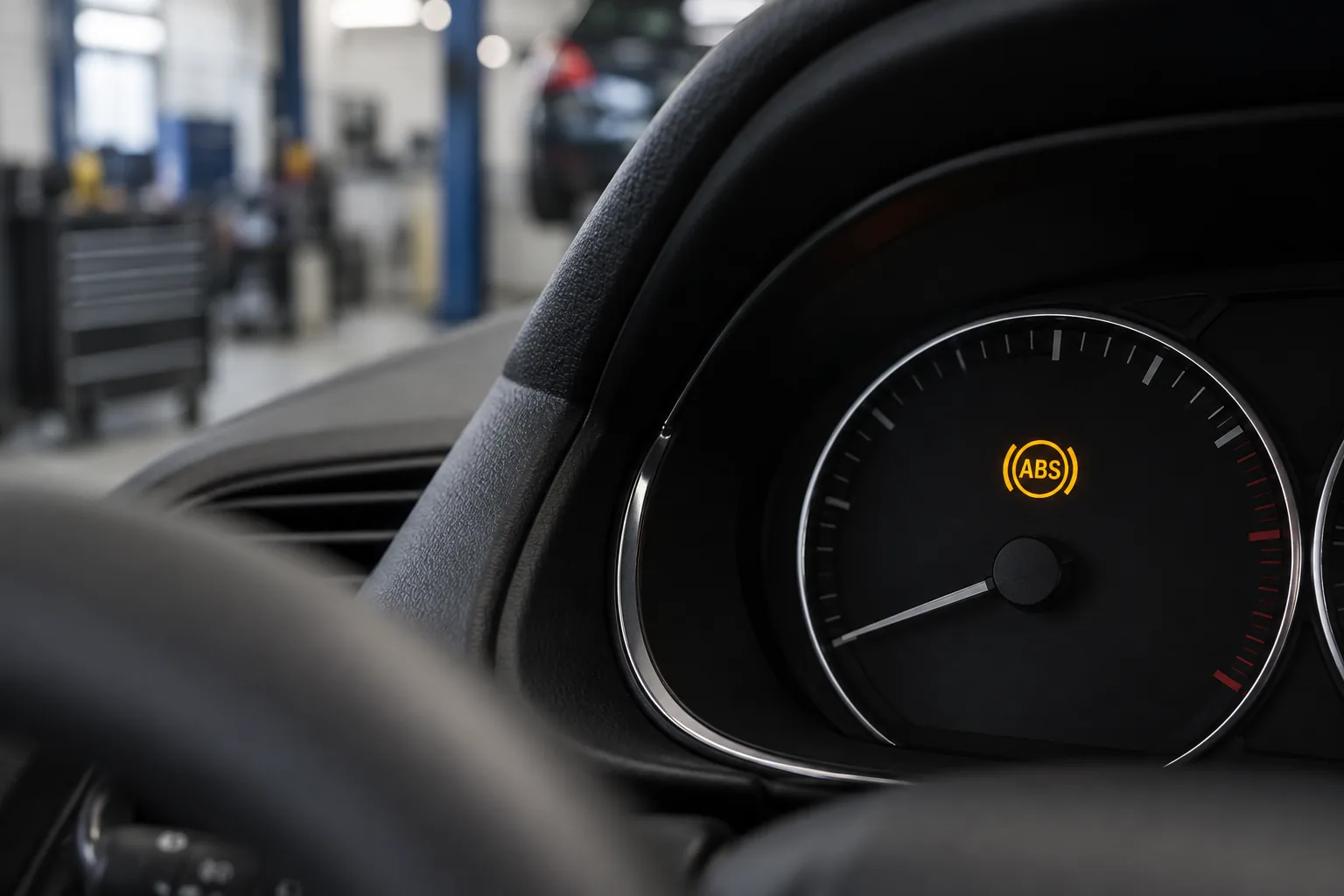

An ABS warning is a diagnostic alert, not a parts recommendation. It does not identify a failed sensor or tell you that a particular replacement part will fit.
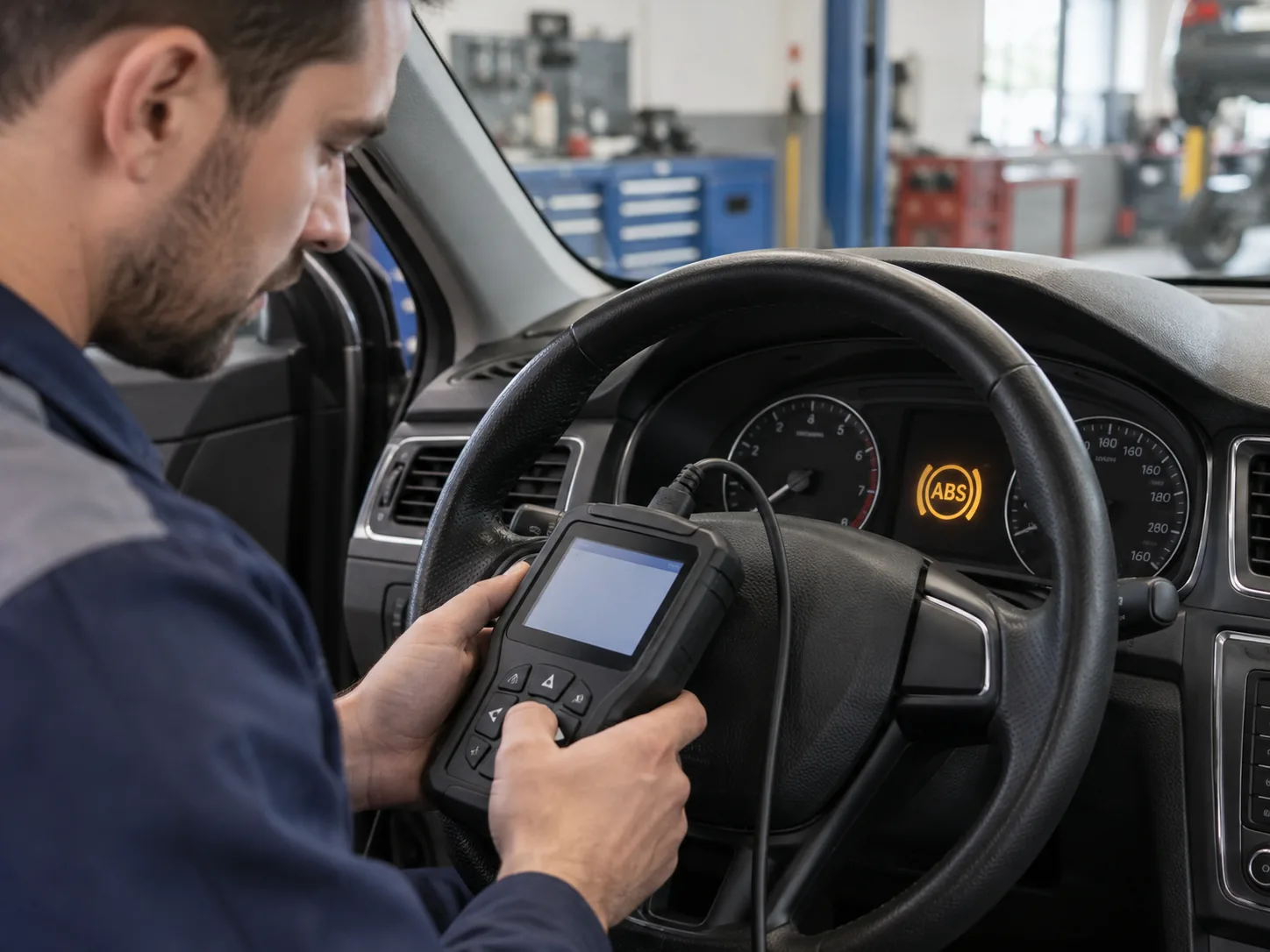
Start with the exact warning and the car’s behavior
Note whether the illuminated symbol is amber ABS, a red brake warning, or both. Check the owner’s manual for your year, make, model, and trim; warning-light meanings and instructions are vehicle-specific. Do not treat an online article as a substitute for the manual’s direction.
A model-specific example shows why the distinction matters: the 2017 Chevrolet Traverse manual says that if its ABS light remains on, the vehicle needs service; it distinguishes that condition from the regular brake-system warning, and says that if both warnings are on, there is also a problem with the regular brakes. These instructions apply to that Traverse, not automatically to other vehicles. Read the 2017 Chevrolet Traverse owner’s manual, ABS warning section.
Use this decision path
| What you see or feel | Next step | Why |
|---|---|---|
| Red brake warning remains on after checking the parking brake, or braking feels abnormal | Follow the vehicle manual’s stop-and-service instructions. If the warning remains, arrange roadside help or a tow rather than continuing routine driving. | The 2017 Traverse manual warns that a brake-system warning can indicate a brake problem and gives stop/tow instructions for that model. |
| ABS warning only, and pedal/braking behavior seems unchanged | Do not infer that every car is safe to drive. Follow the exact vehicle manual and arrange diagnosis; ABS operation may be unavailable. | The same Traverse manual distinguishes ABS warning from the regular brake warning but still says the vehicle needs service. |
| ABS warning appears briefly at startup and then goes out | Compare with the normal lamp check described in your manual. | The Traverse manual describes a brief ABS-light check at ignition as normal for that model. |
What to record before arranging service
- Write down the exact warning symbols and any dashboard message; a photo taken while parked can help.
- Note when the warning appeared and whether the brake pedal or braking behavior changed. Do not recreate a fault by testing hard stops or driving in hazardous conditions.
- Find the warning-light section in your owner’s manual and follow its instructions for your specific vehicle.
- When contacting a repair shop, provide the warning and symptoms. Ask for the ABS/brake system to be diagnosed before authorizing a part replacement.
A warning light alone does not confirm that a wheel-speed sensor, wire, module, or other named component has failed. The correct diagnosis requires vehicle-specific testing by a qualified service provider. This guide does not provide a universal driving-clearance rule.
Quick answer
An ABS light means the vehicle has flagged its anti-lock braking system; it does not tell you which part to buy. Check the exact warning and your vehicle manual first. A red brake warning or changed braking behavior calls for the manual’s urgent instructions; if uncertain, stop somewhere safe and contact roadside assistance or a qualified technician.
Related hub
Browse the How-To Guides hub for other symbol-specific guides.