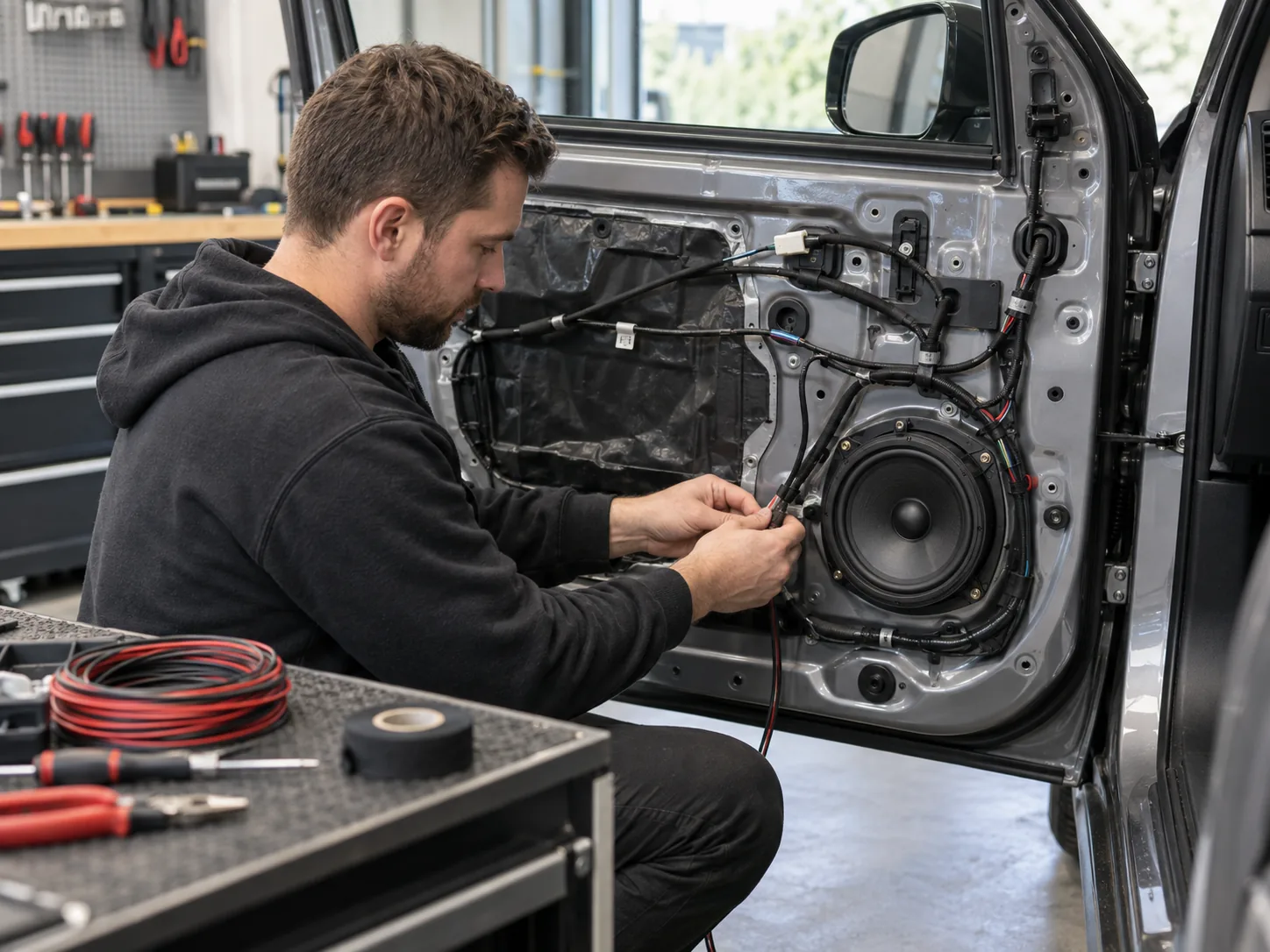

If you are planning a car audio upgrade, start with the part of the system that is actually frustrating you. A weak phone connection, damaged speaker, missing bass, and an outdated receiver are different problems; buying a “full setup” before identifying yours is an easy way to spend twice.
Start with the symptom, not a shopping list
| What you notice | First check | What it can tell you |
|---|---|---|
| Voices or music sound distorted | Try another source at moderate volume; inspect speakers only if accessible | Whether the issue follows the source or may involve a speaker |
| You want more low bass | Measure usable cargo space and decide how much room you can give up | Whether a subwoofer enclosure is practical for your car |
| Sound gets unpleasant only when loud | Identify the receiver, speakers, and any factory amplifier | Which manuals or installer checks are needed before adding power |
| The interface is the problem | Check receiver fitment and the factory features you need to keep | Whether a replacement receiver and vehicle-specific interface are feasible |
These checks narrow the next step; they do not diagnose a component by themselves. If you cannot identify the current equipment, photograph its labels or use the vehicle’s documentation before ordering anything.
Choose a realistic upgrade path
If the receiver is hard to use
Look up the exact year, make, model, trim, and factory audio package in a vehicle-specific fitment service. Check whether a dash kit or wiring interface is required and whether it retains features you care about, such as steering-wheel controls or the backup camera. Crutchfield’s overview of car-stereo installation gear explains the role of vehicle-specific kits and interfaces; it is general guidance, not proof that a particular receiver fits your car.
If a speaker seems to be the problem
Confirm its location, opening size, and mounting depth, then check the factory-audio configuration. Compare the replacement speaker’s sensitivity and continuous (RMS) power handling with the power source. Crutchfield’s speaker guide explains these as matching considerations. Neither a high wattage number nor a larger magnet establishes fit or better sound on its own. Use the exact speaker and receiver/amp documentation for compatibility.
If bass is what you miss
A subwoofer is worth investigating only if low-frequency output is the actual goal and you can accommodate the enclosure. Measure the proposed space, including room needed for cargo and access, and confirm the model’s dimensions and wiring requirements before buying. A compact powered unit still needs a suitable placement and installation plan; “powered” does not mean it fits every vehicle or plugs in without vehicle-specific work.
If the system sounds strained at higher volume
Do not assume an amplifier is automatically the answer. Identify the installed equipment and compare the exact amplifier’s continuous output and supported impedance with the speakers’ documented requirements. For a factory-amplified or integrated system, ask a qualified installer to confirm the signal and control integration before you purchase. Crutchfield’s amplifier installation guide is useful background, but the amplifier manual and vehicle service information govern the actual installation.
Checks to make before ordering
- Write down the vehicle: year, make, model, trim, and factory audio options. “Same model” does not guarantee the same equipment.
- Identify the present system: receiver, speakers, factory amp, and any retained camera or steering controls. Do not infer these from appearance alone.
- Verify physical fit: opening, depth, mounting points, and enclosure space using the exact product dimensions and vehicle-specific fitment data.
- Match electrical details: use the component manuals for impedance, continuous power, wiring, and fuse requirements. Do not match equipment by peak-watt labels alone.
- Price the complete job: include adapters, dash hardware, wiring, and professional labor if needed, not only the main component.
When to leave installation to a professional
Pause if the vehicle has a factory-amplified or integrated audio system you cannot identify, if the work involves running power wire through the firewall, or if you cannot confirm a safe fuse and wiring plan from the exact instructions. Do not guess at fuse sizing, ground points, or vehicle wiring. Use the manufacturer’s instructions and vehicle service information, or have a qualified installer handle it.
FAQ
Should I replace the speakers or head unit first?
There is no universal order. If the interface is what bothers you, verify receiver fitment and retained features first. If sound quality is the complaint, identify the source and affected speaker before choosing parts; the symptom alone does not prove which component is responsible.
Do I need an amplifier?
Not necessarily. Compare the exact head unit’s documented output with the speaker or subwoofer requirements. If the system includes factory amplification, get the integration checked rather than deciding from peak-watt figures.
Is a subwoofer necessary?
No. Consider one when stronger low bass is your specific goal and the enclosure, placement, and wiring work for your vehicle and cargo needs.
Your next step
Before browsing products, make a one-line brief: vehicle and trim, current audio equipment if known, the one problem you want to solve, available space, and budget. Then use those details in a fitment lookup or with an installer. This guide does not recommend a particular model because fitment and system integration depend on the vehicle.
Related Guides
- Car Accessories Hub — browse other practical accessory guides.