
3157 LED Bulb Guide: Fitment, Polarity, and Use-Case Checks
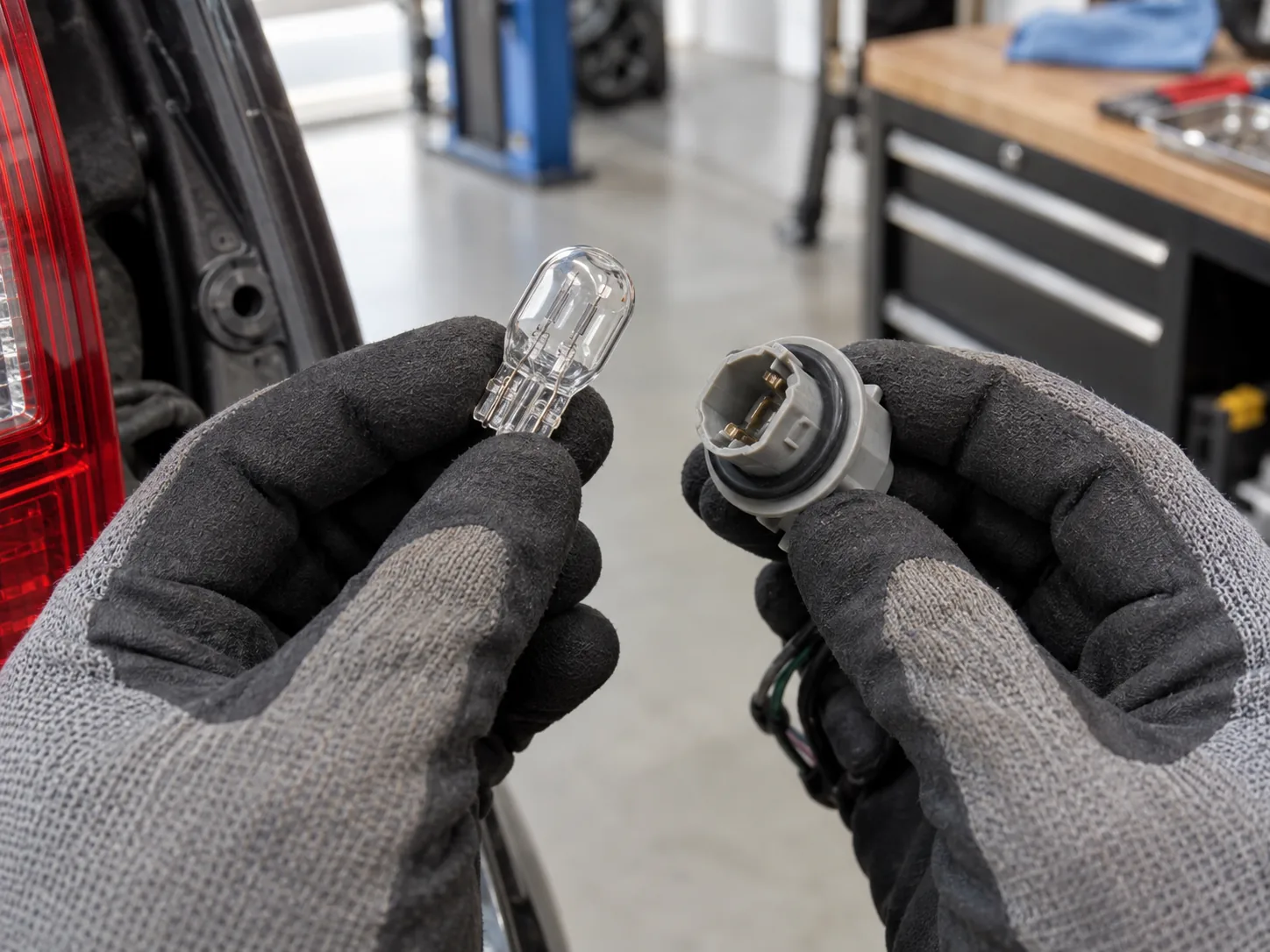
If your vehicle calls for a 3157 bulb, do not order an LED based on the number alone. First confirm the lamp position, the original bulb marking, the socket style, and the required light color. A 3157 is a dual-intensity bulb; a 3156 is a single-intensity type, so they are not interchangeable by assumption. The actual application still depends on your vehicle and lamp assembly.
Quick Decision: Is a 3157 LED the Right Replacement?
| What you find | What to do next | Do not assume |
|---|---|---|
| Owner’s manual and removed bulb both say 3157 | Continue checking the lamp function, color, socket and LED dimensions | That every 3157 LED will fit or work in every 3157 application |
| The vehicle specifies 3156, or the old bulb is marked 3156 | Shop for the specified single-intensity type, then verify the exact LED listing | That a 3157 is a safe substitute because it looks similar |
| Bulb number is unreadable or manual does not identify the position | Look up the exact year, make, model, trim and lamp position in a vehicle-specific fitment source; compare the removed bulb | That a broad “fits 3156/3157” product title resolves vehicle fitment |
| Turn signal flashes rapidly or a warning appears after an LED swap | Check the vehicle and bulb maker’s instructions for load-resistor or flasher requirements | That “CANbus” or “error-free” in a product title guarantees compatibility |
What 3157 Means—and What It Does Not
In a standard incandescent catalog, 3157 is listed as a dual-filament wedge bulb, while 3156 is a single-filament wedge bulb. That distinction matters when one lamp position uses low-intensity running or tail-light output and a brighter stop or signal function. It does not tell you which position on your particular vehicle uses the bulb. The vehicle’s manual or service information must identify that application. Michiba’s bulb specifications list 3156 as P27W and 3157 as P27/7W; an EiKO miniature-lamp catalog likewise distinguishes their single- and dual-filament forms.
Use the number as one piece of evidence, not as a universal compatibility promise. Related codes may share a general wedge shape yet differ in keying, electrical contacts or function. Never force a base into a socket, trim tabs, or use a single-intensity replacement where the vehicle requires two intensities.
Check These Four Things Before You Buy
1. Confirm the exact lamp position
Write down whether you are replacing a stop/tail, turn, parking, side-marker or backup lamp. The same bulb family can appear in different positions across vehicles, and the required color depends on the lamp design. Do not choose a white, red or amber LED solely because that color is available. Match the vehicle’s specified bulb and the lens/application.
2. Match the vehicle, socket and bulb version
Check the owner’s manual or service data for your exact year, make, model, trim and lamp position. Then compare it with the marking on the removed bulb and the socket. If the manual and old bulb disagree, pause and resolve the mismatch before ordering; a prior owner may have installed the wrong part.
LED product listings may distinguish standard and CK-style sockets. AUXITO’s 3157 collection identifies socket compatibility in its product information and says load resistors or flash relays may be needed for some applications. Check the specific product page—not just the collection headline—and contact the maker if your socket type is uncertain.
3. Measure space and check the bulb’s intended use
Compare the replacement’s overall length and width with the original bulb and the available space inside the housing. A larger LED body, heat sink or fan can interfere with a cap or reflector even when the base fits. Confirm the product is listed for the function you need: a bulb described for backup use is not automatically appropriate for a brake/tail or turn-signal position.
4. Plan for circuit behavior and required color
Before closing the housing, test every function that uses that bulb: tail/running lights, brake, hazards and turn signal where applicable. Look for a warning message, rapid flashing, intermittent operation or one brightness level not working. Some vehicles monitor lamp load, and the LED manufacturer notes that an added resistor or compatible flasher may be necessary on certain vehicles. Resistors get hot; follow the product’s mounting instructions and keep them away from wiring and heat-sensitive parts.
What to Do If the New LED Does Not Work Correctly
- No light: Switch the vehicle off. Recheck the part number and seating. Follow the LED maker’s polarity instructions; only rotate and reinstall the bulb if its keyed base and instructions allow it.
- Only one brightness or function works: Reconfirm that the chosen LED supports the required dual-intensity circuit and that the socket contacts are clean and undamaged.
- Fast turn-signal flash or dash warning: Reinstall the original bulb to confirm the circuit returns to normal, then check the vehicle-specific guidance for a compatible load solution. Do not treat a warning as harmless without identifying its cause.
- Light output looks wrong or is poorly visible: Check the bulb color and orientation against the lamp’s intended function. If it remains unsuitable, reinstall the correct original type.
If the socket is melted, corroded, loose or has damaged wiring, stop and have the circuit inspected rather than fitting a higher-output bulb or improvising a repair.
When an AUXITO 3157 LED Is Worth Comparing
Compare a 3157 LED only after your vehicle’s required bulb number, socket arrangement, lamp function, color and available housing space are confirmed. AUXITO lists several 3156/3157 products and notes that fitment should be checked with its vehicle finder and the exact product listing. This is a catalog reference, not a confirmation that a specific bulb fits your car. Check the vehicle-specific fitment result and product details before purchase.
Check the AUXITO 3157 collection for the exact variant and current compatibility notes. This site may earn a commission from qualifying purchases; see our affiliate disclosure. We have not independently tested every listed bulb or vehicle combination.
Frequently Asked Questions
Are 3156 and 3157 interchangeable?
Do not treat them as interchangeable. The standard bulb specifications distinguish 3156 as single-intensity and 3157 as dual-intensity. Use the type specified for the exact lamp position and vehicle.
Does a 3157 LED fit every vehicle that uses a 3157 halogen?
No. The LED may differ in socket wiring compatibility, dimensions, lamp function, color or circuit behavior. Verify the exact product and vehicle rather than relying on the base number alone.
Can I fix fast flashing by adding any resistor?
No. The correct solution depends on the vehicle circuit and LED maker’s instructions. An incorrectly selected or mounted resistor can create heat and electrical risks. Use a vehicle-compatible solution or return to the original bulb.
Comments are closed!